Archives
- 2026-07
- 2026-06
- 2026-05
- 2026-04
- 2026-03
- 2026-02
- 2026-01
- 2025-12
- 2025-11
- 2025-10
- 2023-07
- 2023-06
- 2023-05
- 2023-04
- 2023-03
- 2023-02
- 2023-01
- 2022-12
- 2022-11
- 2022-10
- 2022-09
- 2022-08
- 2022-07
- 2022-06
- 2022-05
- 2022-04
- 2022-03
- 2022-02
- 2022-01
- 2021-12
- 2021-11
- 2021-10
- 2021-09
- 2021-08
- 2021-07
- 2021-06
- 2021-05
- 2021-04
- 2021-03
- 2021-02
- 2021-01
- 2020-12
- 2020-11
- 2020-10
- 2020-09
- 2020-08
- 2020-07
- 2020-06
- 2020-05
- 2020-04
- 2020-03
- 2020-02
- 2020-01
- 2019-12
- 2019-11
- 2019-10
- 2019-09
- 2019-08
- 2019-07
- 2019-06
- 2019-05
- 2019-04
- 2018-07
-
The two SNPs rs rs presented above
2021-01-18
The two SNPs rs4818-rs4680 presented above are part of the haploblock (rs6269, rs4633, rs4818, rs4680) presenting the 3 major haplotypes which influence the enzymatic activity of COMT. This activity is inversely related to the sensitivity of pain in a chronic pain syndrome; so the haplotype (GCGG) h
-
Ligand independent activation of neuronal nuclear estrogen
2021-01-18
Ligand-independent activation of neuronal nuclear estrogen receptors may also continue to occur in absence of ovarian estrogens. AF-1 requires intracellular kinase cascade-dependent phosphorylation of specific residues in the A/B domain of nuclear estrogen receptors (Le Goff et al., 1994; Kato et al
-
Although the presence of calcium in RHA
2021-01-18

Although the presence of calcium in RHA-P active site is confirmed by the homology modeling, some additional observations can be made following the metal depletion and reconstitution experiments performed on RHA-Phis. EDTA-treated RHA-Phis recovers its activity in the presence of divalent cations su
-
br Material and Methods br Results and
2021-01-18
Material and Methods Results and Discussion Conclusions Two chemical coupling agents, BTDE and CDI, were used to activate the free hydroxyl groups of plant cellulose powder and OPH from Flavobacterium ATCC 27551 immobilized on modified carriers by covalent linkages. The highest immobilizat
-
In addition to providing substantial insight into substrate
2021-01-18
In addition to providing substantial insight into substrate recognition, structural studies have revealed important details about mechanisms of glycosylation and HCF-1 cleavage [28,30,33]. Activation of the nucleotide-sugar is accomplished through interactions of the β-phosphate with the N-terminus
-
Why are Tfh cell dynamics so
2021-01-18
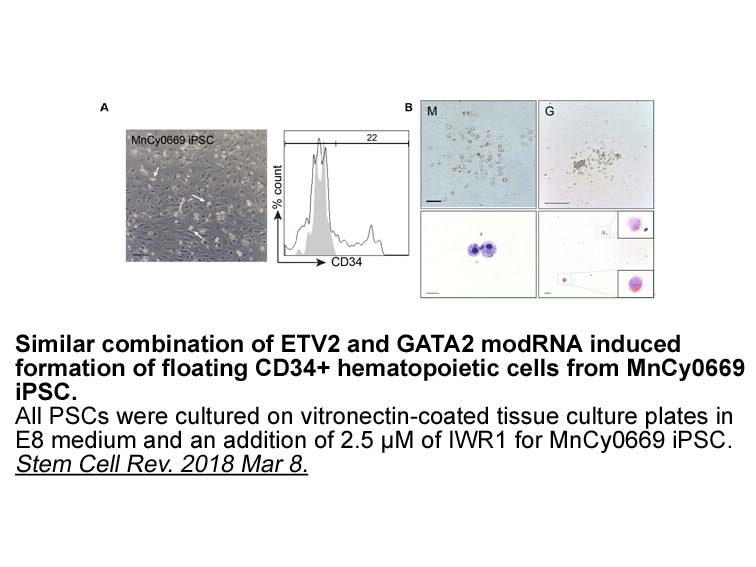
Why are Tfh cell dynamics so fundamentally different in naive and immune animals? Initially, GC tachykinin receptor must pass stringent affinity and specificity checkpoints to ensure only high-affinity non-self-reactive cells are selected. Therefore, restricting primary Tfh cells with the greatest
-
With respect to the muscle
2021-01-18
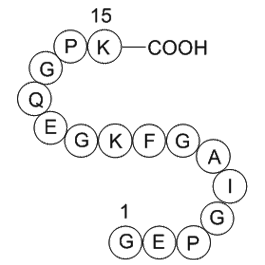
With respect to the muscle compartment, only low protein expression of ASB9 has been detected in healthy human skeletal muscle [as reported in the Human Protein Atlas (HPA)], whereas high levels of Asb5 protein expression are detected in mammalian skeletal muscle, which appears to be important in th
-
One of the features of
2021-01-18
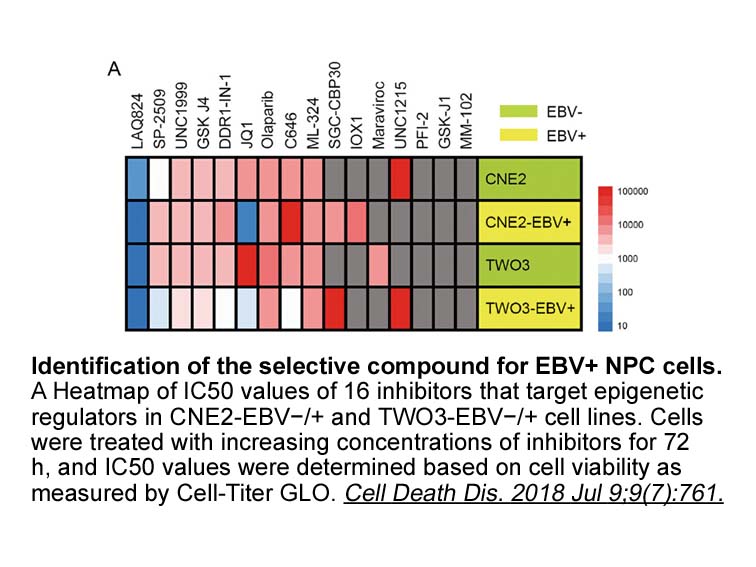
One of the features of ROCO proteins, controlled by their domain architecture is their oligomerization status. By size-exclusion chromatography and Western blot analysis, DAPK1 was proved to form homodimers via its GTPase and kinase domains [53]. Similarly, SJ 172550 synthesis microscopy studies co
-
HvPap a member of the cathepsin F like
2021-01-18
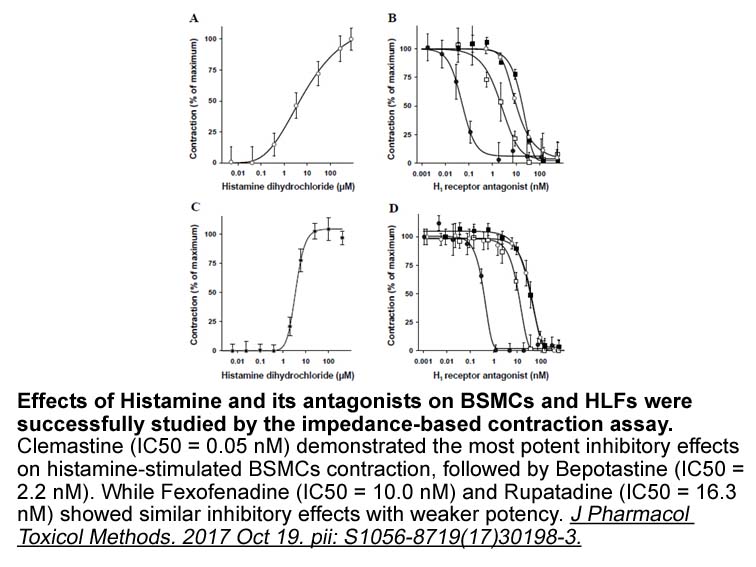
HvPap-1, a member of the cathepsin F-like family, was identified in germinating barley seeds (Sreenivasulu et al., 2008). This enzyme participates in the mobilization of stored proteins (mainly hordeins) during the last phase of grain germination, and its activity is modulated by a propeptide or/and
-
The ability of TKIs in inducing CRTH expression could be
2021-01-18
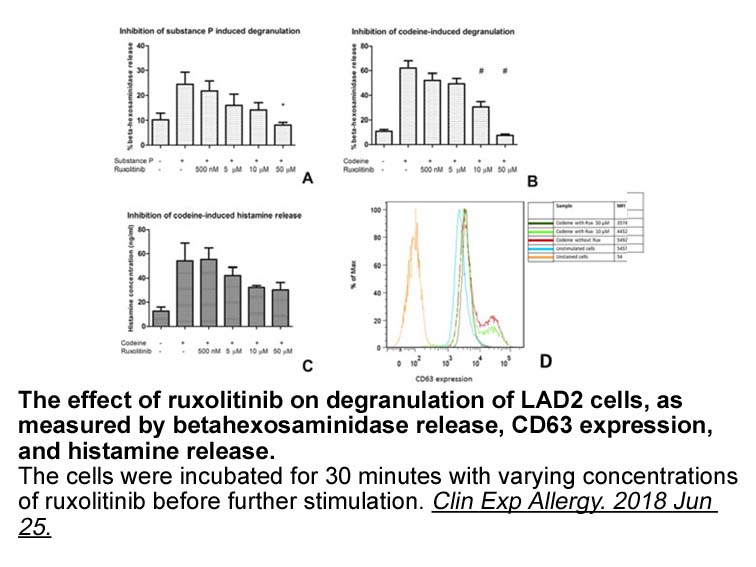
The ability of TKIs in inducing CRTH2 expression could be related to the c-terminal of CRTH2 receptor that is important molecular determinant in the down-stream signaling cascade activation [20]. This requires further studies to prove it or disprove it. Additionally, further studies are needed to ex
-
H http www apexbt com media diy
2021-01-18
Heterozygous SERT knockout showed an intermediate level of FPS in Experiment 1, but normal FPS in Experiment 4, Experiment 5. Apparently, high redundancy exists in the involvement of SERT in normal fear acquisition, as availability of only 60% of normal SERT levels (Homberg et al., 2007a) is still
-
On the other hand the properties of
2021-01-18
On the other hand, the properties of collagen materials could be efficiently improved by proper chemical modification. The crosslinking agents for collagen generally involve aldehydes (e.g., glutaraldehyde (GA), isocyanates (e.g., hexamethylene diisocyanate (HMDI), photoreactive agents, polyepoxy co
-
br Declaration of conflicting interests br Funding The
2021-01-15
Declaration of conflicting interests Funding The author(s) disclosed receipt of the following financial support for the research, authorship, and/or publication of this article: This work was supported by CT Stem Cell grant # 15-RMB-YALE-07 (to L.E.N), and by an unrestricted Research Gift from
-
Metal ions are known not
2021-01-15
Metal ions are known not to be necessary for catalytic activity of serine proteinases. Nevertheless, Co2+ and Ca2+ ions were found to stabilize glutamyl endopeptidase molecule [1], [7], [19]. In our previous study, we have described significant stimulating effect of Ca2+, Mg2+, and Co2+ on biosynthe
-
We postulate that OT contained
2021-01-15
We postulate that OT contained in milk during early postnatal development causes a mild enteroprotective preconditioning of the ER (Fig 9). This is perhaps akin to a mechanism shown by others [50], [51], [52], which is characterized by selective activation of the IRE1a/XBP1/eIF2a (via PKR) UPR pathw
10296 records 358/687 page Previous Next First page 上5页 356357358359360 下5页 Last page